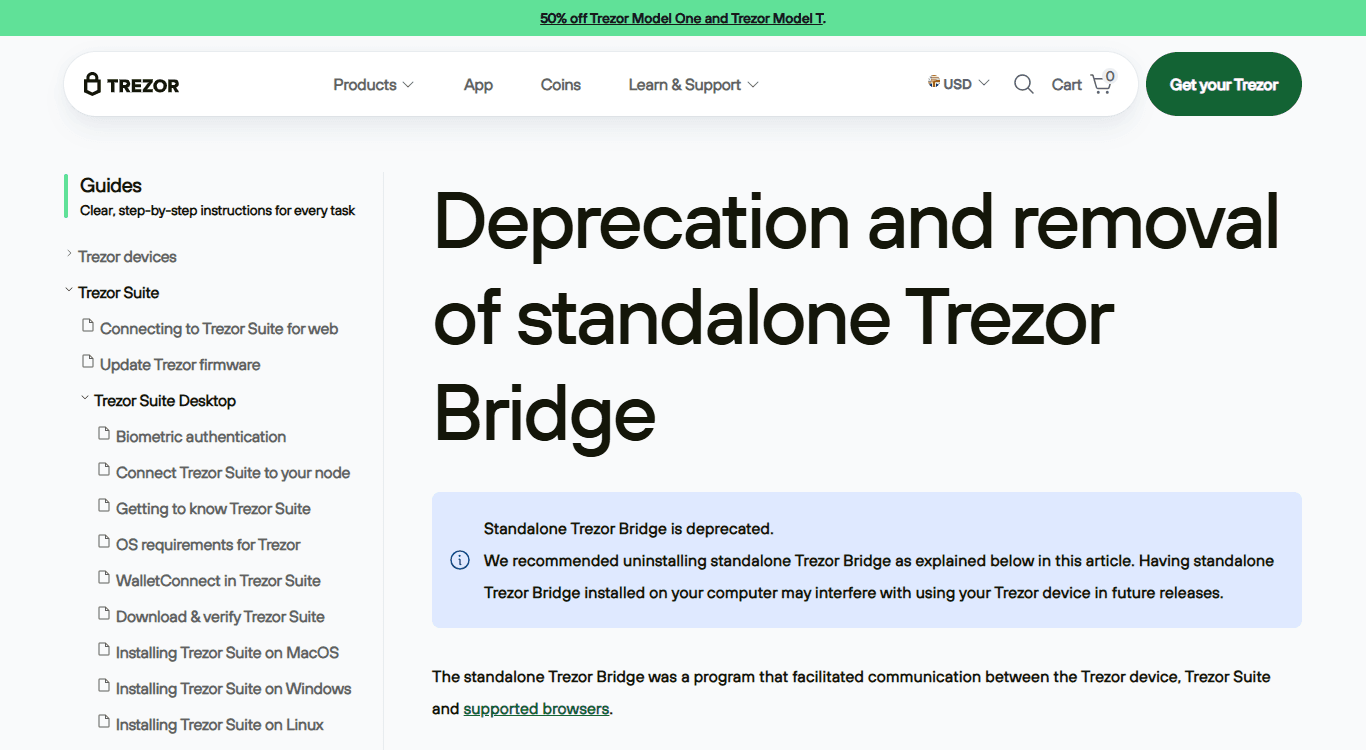
Trezor Bridge® | Connect Your Trezor to Web Browsers
Securing digital assets is one of the most important responsibilities for anyone active in the cryptocurrency world. With the rise of hardware wallets, Trezor has distinguished itself as one of the safest and most user-friendly options for both beginners and experienced users. However, many users underestimate the critical role of Trezor Bridge, the vital communication layer that connects a Trezor hardware wallet to desktop browsers and platforms. In this comprehensive guide, we’ll walk through everything you need to know—how Trezor Bridge works, how to prepare your device through Trezor.io/Start, how to interact with Trezor Suite, and how each component contributes to a secure, streamlined crypto experience.
This 1500-word guide will serve as your complete reference for installing, using, and optimizing Trezor Bridge on any supported device.
What Is Trezor Bridge®?
Trezor Bridge is a lightweight background application that allows your web browser to communicate securely with your Trezor hardware wallet. Without Trezor Bridge, browsers cannot directly access USB devices due to security restrictions. Trezor Bridge solves this by acting as a highly secure intermediary between the browser, the operating system, and your Trezor device.
When you use a Trezor wallet through Trezor.io/Start or through the desktop application Trezor Suite, Trezor Bridge facilitates all communication and ensures that each connection is encrypted and protected from external threats.
Key Features of Trezor Bridge:
Secure USB-to-Browser communication
Automatic device detection
Encrypted data flow
Seamless integration with Trezor Suite
Lightweight installation
Automatic updates
Cross-platform compatibility
These features make Trezor Bridge essential for anyone who wants a secure and reliable connection to their hardware wallet.
Why You Need Trezor Bridge for Your Browser
Modern browsers do not allow direct access to USB hardware for security reasons. This means that without Trezor Bridge running in the background, your Trezor device won’t connect properly, and you won’t be able to approve transactions, view balances, or manage assets through Trezor Suite.
Using Trezor Bridge ensures:
Your browser recognizes your Trezor instantly
The communication pathway is free from interference
You can safely approve transactions from your device
You can access your crypto portfolio using Trezor Suite
Whether you're setting up your device from Trezor.io/Start or already using Trezor Suite for daily activity, Bridge plays an essential background role that guarantees safe operations.
How Trezor Bridge Works behind the Scenes
Trezor Bridge functions as a secure data relay. When your browser needs to communicate with the Trezor hardware wallet, it sends encrypted commands to Trezor Bridge. Bridge then relays these instructions to your connected device through USB. The hardware wallet signs transactions internally, so private keys never leave the Trezor.
Here is the simplified workflow:
Browser → Secure Request → Trezor Bridge
Trezor Bridge → USB Communication → Trezor Device
Trezor Device → Signed Response → Trezor Bridge
Trezor Bridge → Browser
This controlled communication loop is what makes working with Trezor hardware wallets both secure and efficient. It ensures that no malicious program or browser extension can interfere with your wallet operations.
Trezor.io/Start — The First Step for Every New User
If you are setting up your Trezor for the first time, the journey begins at Trezor.io/Start. This official setup portal automates the onboarding process and ensures that your device is initialized with the highest security standards.
At Trezor.io/Start, you will:
Install Trezor Bridge
Install or open Trezor Suite
Update your device firmware
Create or recover a wallet
Set up PIN and passphrase options
Learn essential security practices
The platform also checks your device authenticity, ensuring you’re using an official Trezor product. Since Trezor Bridge is required for browser communication, the Trezor.io/Start wizard automatically prompts you to download it if it isn’t installed yet.
Installing Trezor Bridge: Step-by-Step
The installation process varies slightly depending on your operating system, but the overall workflow is similar.
1. Visit Trezor.io/Start
The setup system automatically detects your OS and provides the correct installer.
2. Download Trezor Bridge
Choose the installer compatible with:
Windows
macOS
Linux
3. Run the Installer
Allow the installer to make system changes and complete the setup.
4. Restart Your Browser
This ensures the browser can detect the newly installed background service.
5. Connect Your Trezor Hardware Wallet
As soon as Trezor Bridge is active, your device will be recognized automatically by Trezor.io/Start or Trezor Suite.
Once installed, Trezor Bridge runs quietly in the background. It is optimized to use minimal system resources and perform updates automatically.
Using Trezor Suite with Trezor Bridge
Trezor Suite is the primary application for daily crypto management. Whether you want to view balances, send or receive coins, manage tokens, or use advanced security features like Tor integration, Trezor Suite provides a professional and secure interface.
Trezor Bridge enhances the Trezor Suite experience in several ways:
Automatic Device Detection
Suite instantly recognizes your device upon connection.
Secure Transaction Signing
All transactions initiated in Suite are securely signed on your Trezor device.
Multi-Asset Support
Bitcoin, Ethereum, and thousands of tokens across multiple networks are supported.
Portfolio & Market Tracking
Trezor Suite gives users real-time insights into their crypto holdings.
Firmware Updates
Critical firmware patches are handled through Suite, and Bridge ensures smooth communication throughout the update process.
Passphrase & Advanced Security Options
Suite allows you to configure additional layers of security that work seamlessly with your hardware wallet.
Trezor Bridge is always active in the background, ensuring Trezor Suite and your device work together flawlessly.
Troubleshooting Trezor Bridge
While Trezor Bridge is stable and efficient, users may occasionally encounter connection issues. Here are the most common troubleshooting steps.
1. Restart Browser
Many connection problems are solved by refreshing the browser after Bridge installation.
2. Check USB Cable and Port
Use a high-quality cable and try switching ports.
3. Reinstall Trezor Bridge
If the service is corrupted or outdated, reinstalling solves most issues.
4. Close Conflicting Applications
Some security tools or USB-related apps may block Trezor Bridge.
5. Update Trezor Suite
Outdated Suite versions may cause detection issues.
6. Check Firmware
Update your device through Suite when prompted.
7. Disable Problematic Extensions
Browser extensions that manage USB communication can interfere.
These steps resolve over 95% of connection issues.
Security Benefits of Using Trezor Bridge
When dealing with cryptocurrency, security is the highest priority. Trezor Bridge strengthens your security posture significantly:
Prevents Direct Browser USB Access: Reducing the attack surface
Encrypts Communication: Ensures safe data flow
Enforces Local Device Confirmation: No action is approved without hardware confirmation
Protects Private Keys: Understanding that private keys never leave your Trezor
Secures Firmware Updates: Using Trezor Suite to authenticate update packages
The combination of Trezor Bridge, Trezor Suite, and Trezor.io/Start forms a highly secure ecosystem trusted worldwide.
Advantages of Using the Trezor Bridge Ecosystem
Fast and Reliable Connections
Bridge ensures instant hardware recognition.
User-Friendly Setup
New users can complete setup in minutes via Trezor.io/Start.
Flexible Usage
Works with major browsers like Chrome, Firefox, and Edge.
Enhanced Privacy
No unnecessary data is collected.
Long-Term Support
Trezor Bridge receives continuous updates to match evolving browser standards.
Future of Trezor Bridge
As browsers evolve and adopt new USB APIs, Trezor Bridge remains an essential component for secure wallet communication. While WebUSB technology is growing, Trezor continues to prioritize Bridge because it provides additional security, stability, and privacy compared to relying entirely on browser-level USB protocols.
Trezor is also expanding the capabilities of Trezor Suite, and Trezor Bridge will remain a core part of maintaining compatibility and secure communication across multiple operating systems.
Final Thoughts
Trezor Bridge® is more than just a background service—it is a fundamental security layer that ensures your Trezor hardware wallet communicates safely with your browser and with Trezor Suite. Whether you are setting up your device through Trezor.io/Start, managing your daily transactions via Trezor Suite, or simply ensuring your device is updated and secure, Trezor Bridge makes the entire experience stable, private, and efficient.
For both beginners and advanced crypto holders, understanding Trezor Bridge helps ensure smooth wallet performance and uncompromised security. With this 1500-word guide, you now have a detailed understanding of how Trezor Bridge works, why it matters, and how it integrates into the broader Trezor ecosystem.